The Revival of the Sharara: Why Peach Silk is 2026’s Ultimate Festive Silhouette
As a fashion observer, I’ve watched silhouettes travel from the royal courts of the 19th century to the high-energy dance floors of modern Sangeets. While the lehenga remains a staple, 2026 has marked the triumphant return of the Sharara Set. It is a silhouette that offers something a heavy skirt cannot: effortless movement, a vintage soul, and a distinctly feminine playfulness.
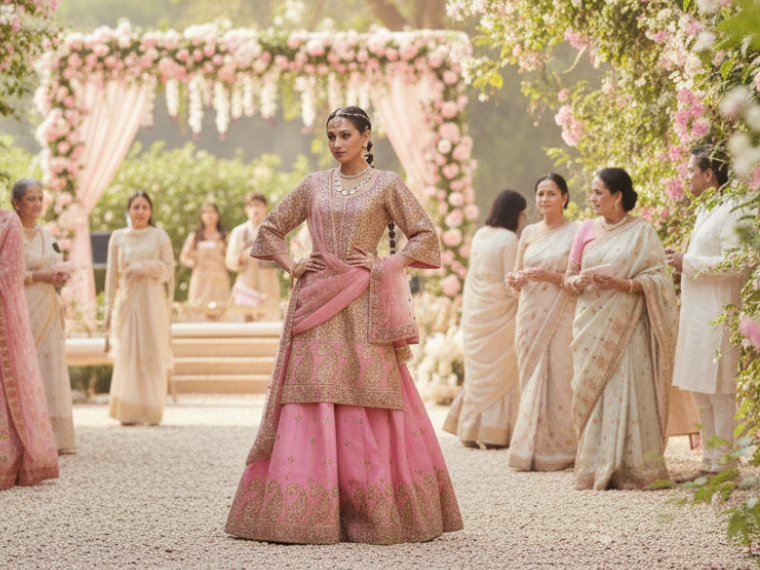
Today, we are diving deep into the technical and aesthetic brilliance of the Peach Silk Sharara—an ensemble that balances the softness of a sunrise with the architectural weight of traditional Indian craftsmanship.
1. The Color Theory: Why Peach?
In the world of ethnic wear, “Pastel” is often misunderstood as “Subdued.” On the contrary, a Peach palette in a silk base is a high-visibility choice. Unlike stark whites or heavy maroons, Peach reflects light softly against the skin, providing a natural radiance that works beautifully for both outdoor morning ceremonies and indoor evening festivities.
It is a “transitional” color—sophisticated enough for a sophisticated wedding guest and fresh enough for a bridesmaid. When rendered in silk, the peach hue takes on a golden undertone, making it a perfect companion for warm-toned metallic embroideries.
2. The Fabric Choice: Silk Meets Net
The success of a Sharara depends entirely on the “fall” of the fabric. By utilizing Silk for the top and the flared bottoms, the outfit gains a structured elegance. Silk provides the necessary weight to hold the flare of the Sharara, ensuring the pleats look crisp rather than limp.
The addition of a Net Dupatta is a strategic styling move. It breaks the visual density of the silk, adding a layer of sheerness that keeps the overall look airy and youthful. It allows the intricate work on the Choli to remain visible, even when draped traditionally.
3. Decoding the Heritage: Tamba Gota and Zardosi
What elevates a simple suit to a luxury ensemble is the surface ornamentation. This season, we are seeing a massive shift toward Tamba Gota (Copper Gota). Unlike the bright yellow-gold Gota of the past, Tamba Gota has a muted, earthy rose-gold finish that blends seamlessly with Peach Silk.
- Tamba Gota: Provides a vintage, “heirloom” feel that mimics antique copper-wire work.
- Zardosi: The metallic threadwork adds a three-dimensional texture, giving the outfit a royal weight.
- Sequins: These act as the “light catchers,” ensuring that as you move, the outfit glimmers under the event lights without looking overwhelming.
A Blogger’s Suggestion for Your Next Event
If you are looking to embrace this trend, I highly recommend looking at the Peach Silk Sharara Set (SKU: ff10029). It is a textbook example of how Tamba Gota and Zardosi can transform a contemporary silhouette into a timeless piece of art.
This specific set, paired with its delicate Net Dupatta, offers the perfect “Wedding Guest” or “Sangeet” look for those who want to stand out through understated luxury rather than loud colors.
4. Styling the Sharara for Maximum Impact
To keep the look modern, I suggest the following styling tips for a Sharara:
Jewelry: Opt for Chaandbalis (crescent earrings). The Sharara has a strong Mughal influence, and heavy earrings with a bare neck emphasize the flared silhouette perfectly.
Footwear: Since the Sharara is flared at the bottom, Juttis are your best friend. Not only are they traditionally accurate, but they allow for the comfort needed to navigate a busy wedding floor.
Hair: A messy side-braid or loose waves work best here. You want to contrast the structured silk with soft, fluid hair.
The Final Word: Fashion is about the feeling of the fabric and the history of the craft. The Silk Sharara is a tribute to our past, redesigned for the dynamic woman of today. Choose peach for its glow, silk for its grace, and hand-embroidery for its soul.